
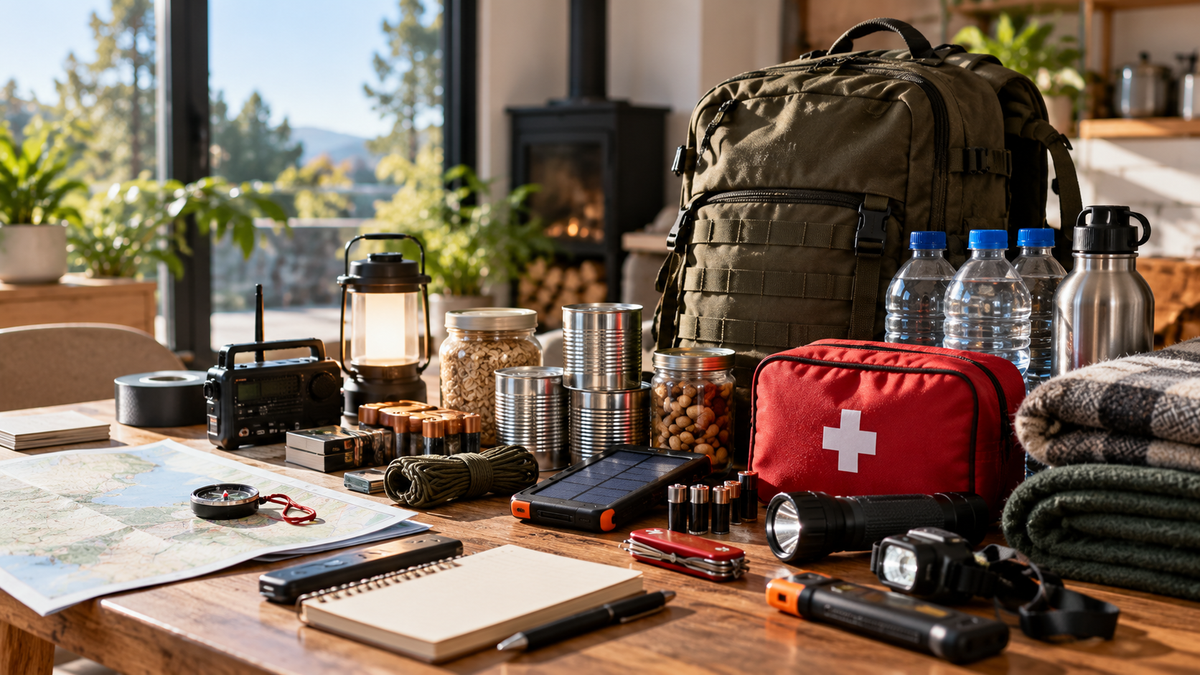
Most emergencies are not dramatic. A storm takes the power out for three days. A water main breaks. A wildfire means you have twenty minutes to leave. The people who handle these well are not survivalists. They just did a small amount of preparation while nothing was wrong.
Here is a version that fits in one afternoon.
Start with water
Water is the thing you run out of first and the thing you cannot improvise. A common guideline is roughly four litres per person per day, and enough for three days as a minimum. A week is better.
Bottled water stored in a cupboard is fine. So are a few clean containers filled and rotated occasionally. Include your pets in the count, and remember you need some for washing, not only drinking.
Then light and power
When the power goes, candles are the wrong answer. Get a couple of LED torches and a headlamp, because a headlamp leaves your hands free. Keep spare batteries with them, not in a different drawer.
A power bank for your phone matters more than people expect. Your phone is your radio, your map and your way of telling family you are alright. Keep one charged.
Food that needs nothing
Not survival rations. Just three to seven days of food your household will actually eat that requires no cooking and no refrigeration. Tinned fish, beans, nuts, dried fruit, crackers, peanut butter. A manual can opener, which is the single most forgotten item on every list.
Eat from this supply occasionally and replace it. Food you rotate is food that is not five years expired when you need it.
A plan beats a kit
This is the part almost everyone skips, and it matters more than the supplies. Decide now: where does the household meet if you cannot get home, and who is the one out-of-area contact everyone calls if local phones are jammed.
Write it on paper. Put a copy in each wallet and one on the fridge. Phones die, and nobody remembers numbers any more.
Then talk it through once with everyone who lives with you, children included. A plan that lives in one person's head is not a plan.
Documents and cash
Keep copies of the important documents somewhere you can grab quickly, plus a digital copy somewhere you can reach from any device. Passports, insurance, prescriptions, bank details.
Keep some cash in small notes. Card machines and cash machines both stop working when the power does.
The twenty minute bag
If you ever have to leave fast, you will not be thinking clearly. One bag by the door with water, a torch, a charger, a change of clothes, any medication, the document copies and the cash removes every decision from that moment.
Check it twice a year. Medication expires and children outgrow clothes.
Know your own risks
Generic lists only get you so far. What is realistic where you live? Flooding, storms, wildfire, earthquake, long power cuts, extreme heat? Find out how your local authorities issue warnings, and make sure your phone can receive them.
Preparation is not fear. It is the reason a bad week stays a bad week instead of becoming something worse. Do the water and the meeting point today, and you are already ahead of almost everyone on your street.
The Survival Strategy Master Playbook covers this in depth across eleven chapters, including specific plans for storms, fire, power loss and evacuation.
Teilen:
How to Grow on Social Media Without Posting All Day
Talk So People Listen: Three Simple Habits