
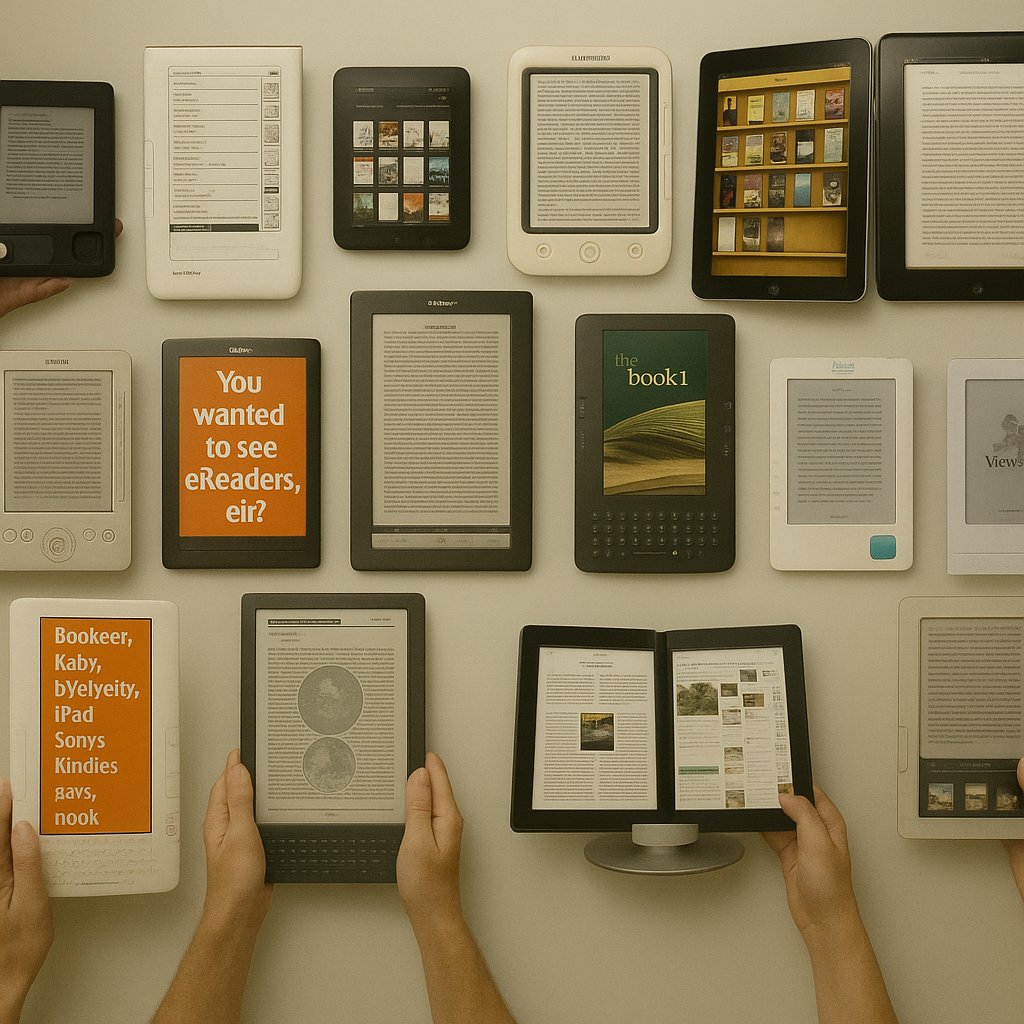
The history of the eBook begins with simple text files on shared computers and becomes mainstream with portable formats and dedicated readers. Browsers and phones make digital reading every day. Today, you can buy on Shopify, open instantly, and enjoy accessible features that fit your life.

1960s–1980s: Digital text experiments show what’s possible
Early digital texts proved that books could live on screens. Researchers shared manuals and literature on mainframes and university networks. Files were plain, but searchable. You could copy passages and move them between systems. These experiments seeded the idea of libraries without shelves and reading that traveled with you.
-
Plain text meant small files and fast transfer.
-
Terminals enabled quick search across full documents.
-
Collaborative typing projects spread classic works.
1971: Project Gutenberg and Michael Hart spark a movement
Project Gutenberg launched in 1971 when Michael Hart typed the U.S. Declaration of Independence into a computer. Volunteers then digitized public-domain books and shared them freely. You could download texts anywhere you had a connection. The project showed that access could be global, instant, and community-driven.
-
Plain-text standards simplified sharing and storage.
-
Public-domain focus unlocked thousands of classics.
-
Readers discovered free, legal digital libraries.
1990s–2000s: Formats and devices make reading comfortable
Portable formats and dedicated devices made long-form reading practical. PDF preserved layout fidelity for charts and forms. EPUB introduced reflowable text that adjusts to your screen. Devices like the Rocket eBook (1998), Sony Librie (2004), and Kindle (2007) added long battery life, crisp e-ink, and wireless delivery.
-
PDF = fixed layout; perfect for worksheets and design-heavy pages.
-
EPUB = flexible text; great for small screens and adjustable fonts.
-
Rocket eBook pioneered handheld convenience.
-
Sony Librie popularized e-ink contrast for long sessions.
-
Kindle mainstreamed instant storefronts and syncing.
2010s: Mobile and browser reading become the default
Browsers and apps put your library on every device. You read on a laptop, tablet, and mobile, often with your place saved across sessions. Built-in readers improved zoom, search, and note-taking. Accessibility advanced with adjustable fonts, high-contrast modes, and strong screen-reader support.
-
Chrome, Safari, Firefox, and Edge handle long documents well.
-
Apps sync highlights and bookmarks across devices.
-
Night modes reduce glare in low light.
-
Short sessions fit into commutes and breaks.
2010s–2020s: Flipbook experiences keep the page-turn feel
A flipbook recreates a designed page in your browser with animated turns, thumbnails, and zoom. You get the feel of print without the print. It shines when layout precision matters—workbooks, diagrams, and page-referenced lessons. You skim visually, jump sections fast, and preserve page numbers for shared references.
-
Click or swipe to move through chapters.
-
Page thumbnails speed navigation.
-
Zoom reveals details on charts and images.
Why eBooks changed reading for good
eBooks broaden access, reduce friction, and help authors reach global audiences quickly. You carry shelves in a pocket, search instantly, and learn faster.
-
Access: Buy worldwide, open in seconds, no shipping.
-
Affordability: Digital production lowers barriers for creators and readers.
-
Accessibility: Adjustable fonts, high-contrast modes, and screen readers support more needs.
-
Author reach: Search, sharing, and storefronts boost discovery.
Pros and cons at a glance
Digital books trade paper feel for speed, flexibility, and reach.
Pros
-
Instant access and easy search.
-
Adjustable text and inclusive features.
-
Portable library across your devices.
-
Fast updates and global distribution.
Cons
-
Screens can tire eyes over long sessions.
-
Fixed layouts fit small screens less well.
-
File organization needs a simple routine.
Conclusion: Your next chapter is a click away
You now see how we moved from early files to rich, accessible reading on any device. If you’re ready to learn faster, explore titles across genres at The Master Playbook. Choose a topic, check out on Shopify, and open your book in minutes—whether you prefer flexible text or the page-turn feel of a flipbook.
-
Share:
eBooks vs. Flipbooks: Which Digital Format Fits Your Reading Style?
What Is an eBook — And Why Readers Everywhere Are Switching